
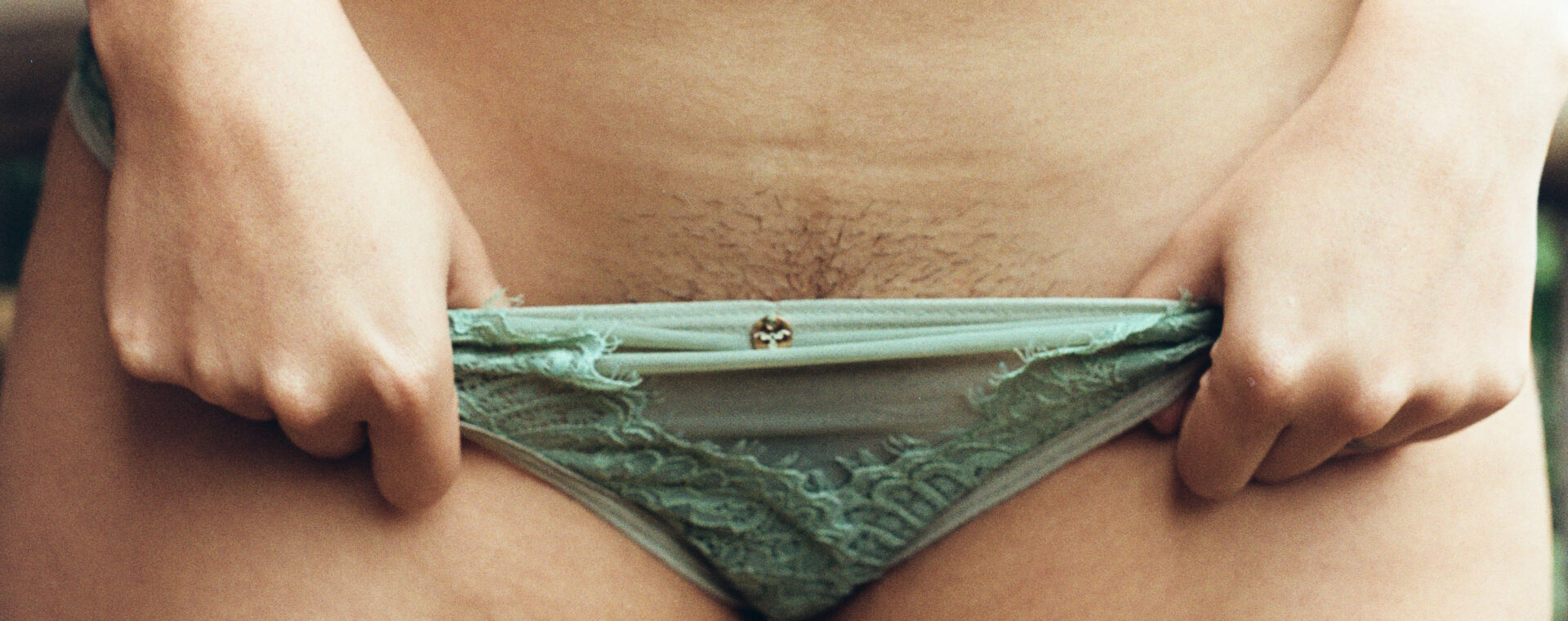
Why do we shave?
We have three types of body hair, and yes, each one exists to fulfill specific natural functions. They vary in size and thickness, but all serve as a literal protective barrier against the outside world.These are:
Facial hair: Covers the entire face, most visible on our eyebrows, eyelashes, sideburns, upper lip, and beard.
Body hair: Covers most of our skin, except for the palms of the hands and the soles of the feet.
Pubic hair: Concentrated mainly around the linea alba, mons pubis, inner thighs, vulva, and anus.
So let’s get some context.
Since ancient times, humans have tried to remove body hair for different reasons. Let’s take a look:
During the Stone Age, both men and women sharpened stones to remove hair. Without haircare or hygiene routines, body hair grew in excess and became a source of bad odors, lice, and mites.
Later, in Egyptian society, hair removal became common due to the high temperatures, but it also symbolized civilization and refinement, practiced by both sexes.
In the Roman Empire, depilation was considered a matter of class and personal hygiene. For the first time in history, a distinction was made between women who removed body hair and those who didn’t.
During the Renaissance, a social rule emerged for women: facial hair had to be removed to fit the ideal image of femininity. And of course, many followed it.
By the early 1900s, women’s fashion began to change: dresses exposed arms and underarms, so those areas were also shaved for aesthetic reasons.
Within a few years, women’s body hair became socially unacceptable. Having smooth, hair-free skin was the standard of beauty.But why did women come to believe that shaving was the “right” thing to do? In 1915, Gillette launched the first razor for women, promising to eliminate the “embarrassing growth of body hair.” Soon after, other beauty and hair removal companies adopted the same narrative, launching products of every kind, at every price point, with varying levels of pain and duration, all to reinforce the idea that female body hair was shameful.
Fast forward to the 21st century, and many of us still remove body hair, sometimes because it bothers us, itches, or simply because we want to. Others let it grow freely, trim it, or just don’t touch it at all. But we should question why we still think removing it is more attractive or hygienic.
Continuing to remove body hair fuels a powerful industry, one we’ve helped build and sustain through our consumption. Razors, wax strips, laser treatments, creams, gels, exfoliants, sterilizers, towels, sticks, every possible product that supports this cycle. And, of course, the more “permanent” the method, the higher the cost.
Have you ever asked yourself why you did it for the first time? Do you know what happens every time you do?
Each time we remove body hair, we interrupt a purely biological process. Hair allows our skin to stay in contact with the environment, it receives stimuli, regulates temperature, absorbs nutrients, and acts as a barrier against viruses, bacteria, and diseases. Hair protects the most sensitive parts of our bodies: our eyes, ears, nostrils, armpits, nipples, vulva, and anus. Each hair exists for a specific reason, and when it’s removed, it naturally grows back.
It’s easy to understand this, but harder to truly process it and act differently. Most women still shave or wax out of habit, appearance, or aesthetics, even knowing the consequences. There’s also a deep-rooted cultural influence from the male gaze.
For some, a woman without hair is seen as more attractive, as if she’s “prepared” for her partner, an association tied to purity and virginity. But in reality, this expectation infantilizes women, because body hair increases as we mature.
One of the most influential forces behind this has been pornography, particularly heteronormative porn, where hairy men pursue hairless women, teaching us, implicitly, that this is how we should look. Yet body hair during sex actually protects the genitals, prevents folliculitis, and reduces the risk of sexually transmitted infections.
The shame and discomfort around our body’s natural state can no longer dictate what we do. After years of practice, we’ve become experts at removing it, deciding which hair “looks good” and which “doesn’t.” But the truth is, this choice is rooted in aesthetic violence, a system that has told us for generations how our bodies should look.
Hair removal is deeply intimate and personal. What matters most is doing it consciously.
Having body hair, trimming it, or removing it completely should always be your choice.
Letting it grow is letting yourself 𝑓𝑙𝑜𝑟𝑒𝑆𝑒𝑟 𑁍
Thank you for getting here ♡
Now tell us, have you ever questioned why we shave and what your own journey has been?
Otras entradas
Our history
Why do we shave?